
Oct . 14, 2025 17:11 Back to list
Boost Vehicle Lifting Efficiency with a Premium Lifting Power Unit for Vehicles
When it comes to elevating vehicles safely, reliably, and efficiently, nothing compares to the power and precision of a Lifting power unit for vehicles. Whether you're operating a commercial garage, vehicle maintenance facility, or portable service truck, choosing the right Lifting platform power unit is the key to ensuring smooth and controlled lifting for vehicles of all sizes.
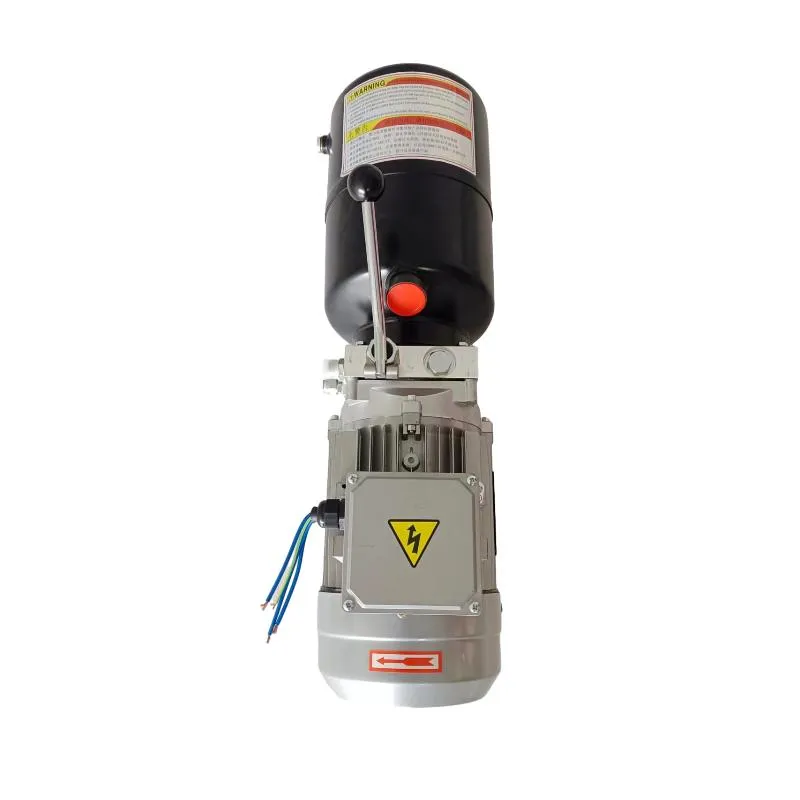
Performance Adaptability for Various Vehicle Types with a Lifting Power Unit for Vehicles
Not all vehicles are created equal—and neither should their lifting systems be. A Lifting power unit for vehicles must be carefully matched to the weight class, chassis height, and intended lift capacity of the vehicle it supports. For small sedans or light-duty trucks, a standard single-acting lift hydraulic power unit may be sufficient. However, heavier vehicles such as SUVs, vans, or commercial transporters demand more robust, double-acting or high-flow systems to ensure safe and stable elevation.
One of the key performance requirements is flow rate. For faster lift times and high-cycle operations—such as in automotive workshops—a Lifting platform power unit with a high GPM (gallons per minute) flow capability and a heavy-duty motor is essential. The motor horsepower and the hydraulic pump's displacement directly influence how quickly and reliably a vehicle reaches the desired lift height.
Additionally, pressure settings should be optimized for the vehicle type. Overpressurization may cause component fatigue, while underperformance could hinder lift capacity. A good lift hydraulic power unit should feature an adjustable pressure relief valve, allowing for precise control tailored to different vehicle models.
Understanding Filter Replacement and Selection for Lifting Platform Power Unit Systems
One often overlooked yet critical component of any Lifting power unit for vehicles is the hydraulic oil filter. Contamination is a leading cause of system wear and failure, so selecting the correct filter type and replacement schedule can significantly extend the lifespan of your Lifting platform power unit.
Typically, hydraulic oil filters should be replaced every 500 to 800 operating hours, depending on the environment and system workload. In high-dust or high-cycle applications, more frequent replacement is recommended. If the system exhibits sluggish lifting, erratic motion, or elevated fluid temperatures, a clogged filter may be the root cause.
Choosing the correct filter also matters. Micron ratings between 10 to 25 are common, but the rating must match the tolerance of the pump and valve components inside your lift hydraulic power unit. Compatibility with the oil type—whether mineral-based or synthetic—should also be checked. High-efficiency, clog-resistant filters are a worthwhile investment for demanding industrial applications or public service fleets.
Moreover, many advanced Lifting platform power unit models come equipped with clog indicators or maintenance alerts to ensure optimal operation. For buyers seeking convenience and long-term performance, models with tool-free filter access and standard-size cartridge replacements offer reduced downtime and easier serviceability.
How a Lift Hydraulic Power Unit Differs from Traditional Hydraulic Systems
Unlike standard hydraulic systems used in industrial presses or construction equipment, a Lifting power unit for vehicles is engineered with a specific purpose: to vertically raise and lower vehicles in a safe, balanced, and controlled manner. The design emphasizes quick lifting, controlled descent, and reliable load holding—all of which require specialized components.
For instance, a typical Lifting platform power unit includes a hydraulic pump, an electric motor, a reservoir, and a manifold valve block—all housed in a compact, mobile-ready frame. This integration is much more compact and application-focused than the modular setups found in larger industrial machines.
Also, lift hydraulic power unit systems are often equipped with additional safety valves, such as flow control valves, check valves, and emergency descent valves. These features are crucial in vehicle lift operations where even the slightest instability can pose a safety hazard.
Compared to conventional hydraulic systems, Lifting power unit for vehicles solutions provide plug-and-play functionality, often prewired and pre-tested for immediate deployment. They can be installed on mobile car lifts, scissor lifts, or 2-post and 4-post garage lifts with minimal setup.
Application Scenarios and Smart Customization of Lifting Power Unit for Vehicles
The versatility of a Lifting power unit for vehicles extends beyond automotive garages. These compact yet powerful systems are used in agriculture, logistics, emergency vehicle maintenance, and even by mobile mechanics offering roadside repairs. From scissor lifts to column lifts and portable car ramps, the Lifting platform power unit serves as the hydraulic heart that ensures precise movement and secure lifting.
For businesses dealing with variable vehicle types or challenging outdoor environments, customization is a game-changer. Buyers can specify reservoir size, valve configuration, mounting orientation, and power options (AC or DC). In mobile service vans, for example, a 12V or 24V lift hydraulic power unit allows lifting operations without external power supplies.
Noise reduction is another modern advantage. Many new-generation Lifting power unit for vehicles units include noise-dampening enclosures and low-vibration motor mounts—ideal for settings where quiet operation is essential.
Lifting Power Unit for Vehicles FAQs
What types of vehicles can a Lifting power unit for vehicles lift?
It depends on the unit’s pressure rating and flow rate. From compact cars to large SUVs and delivery trucks, properly matched units can handle a wide variety of vehicles safely.
How often should I replace the filter in my Lifting platform power unit?
Typically every 500–800 hours of use, or sooner in dusty or high-load environments. Follow the manufacturer’s maintenance guidelines for best performance.
What makes a lift hydraulic power unit better than a traditional hydraulic pump?
It’s compact, purpose-built, and designed for vertical lifting with integrated safety and control features that standard hydraulic pumps don’t offer.
Can I install a Lifting power unit for vehicles on a mobile lift system?
Yes. Many models come in 12V or 24V configurations suitable for mobile lifts and can be mounted horizontally or vertically as needed.
How does a Lifting platform power unit improve workshop efficiency?
It allows fast, controlled lifting and lowering of vehicles, saving time and reducing manual effort, which translates to faster turnaround and higher throughput.
-
High Quality China Stage Hydraulic Cylinder for Professional Stage
NewsApr.16,2026
-
Guide to Selecting High Quality China Hydraulic Pneumatic Cylinder
NewsApr.09,2026
-
China Top Link Hydraulic Cylinder Solutions for Agricultural and Industrial Needs
NewsApr.07,2026
-
China Snap Ring Hydraulic Cylinder Solutions for Optimal Performance and Reliability
NewsApr.04,2026
-
China ISO Hydraulic Cylinder Solutions for Optimal Equipment Performance
NewsMar.31,2026
-
Comprehensive Guide to China Hydraulic Telescopic Cylinder Solutions
NewsMar.28,2026