
Oct . 14, 2025 17:14 Back to list
Industrial Strength and Precision: Your Ideal Telescopic Hydraulic Cylinder Solution
Compact, powerful, and engineered for versatility, the Telescopic hydraulic cylinder is revolutionizing lifting mechanisms across construction, mining, transportation, and agricultural sectors. With its extended stroke capabilities in a compact retracted size, the Telescopic hydraulic cylinder has become the go-to choice for applications that require long reach but limited installation space. Whether you're exploring a new machinery design or upgrading existing equipment, understanding its structure, pressure capabilities, and customizability can unlock next-level performance.
Common Structural Forms of Telescopic Hydraulic Cylinder and Their Engineering Significance
The most commonly used structural forms of the Telescopic hydraulic cylinder are single-acting and double-acting configurations. Single-acting cylinders extend using hydraulic force and retract through gravity or external load. This design is commonly seen in dump trucks and trailers, where load weight supports retraction.
In contrast, double-acting Telescopic hydraulic cylinders use hydraulic force for both extension and retraction. These are favored in applications requiring precise bidirectional control, such as cranes, lift platforms, and some industrial presses.
A 3 stage telescopic hydraulic cylinder is a popular design variation in both single and double-acting types. It consists of three nested stages that extend in sequence, allowing for extremely long strokes while occupying a short closed length. This compact design maximizes mechanical efficiency, especially in space-constrained installations.
Each stage in a 3 stage telescopic hydraulic cylinder operates with a specific bore and rod size, ensuring smooth and stable deployment. This makes the design structurally reliable under high-load conditions.
Appearance and Internal Design Features of the Telescopic Hydraulic Cylinder
The external appearance of a Telescopic hydraulic cylinder is characterized by its tiered barrel layout—larger outer stages enclosing progressively smaller inner stages. When fully extended, the telescoping nature is evident, resembling a mechanical ladder in motion. Manufacturers apply high-durability coatings such as chrome plating to the visible rods to minimize wear and corrosion.
Internally, each stage has its own hydraulic seal and guide bushing. The sequencing mechanism ensures that stages extend one after the other to prevent sudden surges or mechanical locking. In high-performance versions from a professional hydraulic cylinder manufacturer, the pistons are engineered with low-friction rings and heavy-duty seals that extend service life and reduce maintenance intervals.
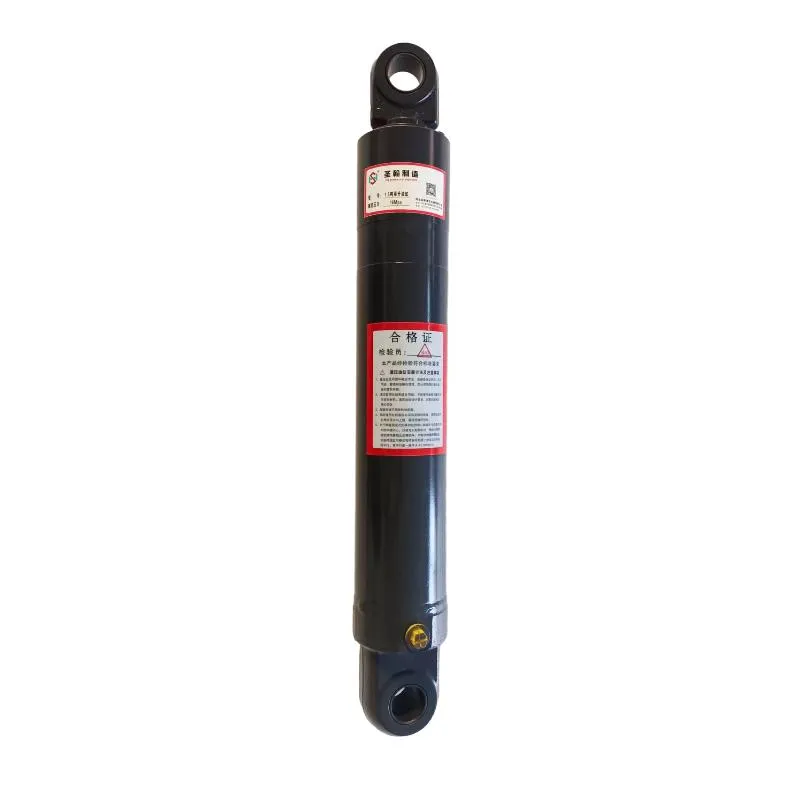
Moreover, many modern models use specialized anti-twist guides to maintain alignment during operation, which is crucial in preventing side loads that could damage the assembly.
Pressure Tolerance and Safety of the Telescopic Hydraulic Cylinder in Demanding Work Environments
The typical working pressure of a Telescopic hydraulic cylinder ranges from 1600 PSI (110 bar) to 3000 PSI (207 bar), depending on the application. For heavy industrial lifting or high-capacity dumping tasks, it’s common for pressure levels to approach the upper end of this range.
To prevent failure, professional hydraulic cylinder manufacturer standards ensure that each unit undergoes rigorous burst testing, often rated up to 1.5x or 2x its working pressure. This provides a safety buffer against sudden spikes in hydraulic force.
In a custom telescopic hydraulic cylinder, pressure ratings can be optimized for specific applications. For example, mining-grade cylinders may be designed for high-pressure endurance, while those for agricultural machinery can be lighter but still robust.
Furthermore, integrated safety valves, pressure relief systems, and anti-drop locks can be built into the cylinder or the hydraulic circuit, adding layers of protection for personnel and equipment.
Tailored Solutions: The Role of a Reliable Hydraulic Cylinder Manufacturer in Customization
When standard sizes and capacities don’t meet your needs, a custom telescopic hydraulic cylinder is the perfect solution. Leading manufacturers work closely with OEMs to tailor the stroke length, mounting styles, bore diameter, and rod material to match application requirements precisely.
For instance, if you're designing a compact utility loader, you may need a 3 stage telescopic hydraulic cylinder with special side mounts and corrosion-resistant materials for outdoor exposure. On the other hand, industrial presses may require low-speed, high-force cylinders with specialized seal packages.
Partnering with a quality hydraulic cylinder manufacturer also allows for customized port positioning, advanced surface treatments like nickel or ceramic coatings, and the use of smart sensors for stroke feedback and predictive maintenance.
For companies operating in niche industries, investing in a custom telescopic hydraulic cylinder pays off by reducing breakdowns, improving operational accuracy, and extending equipment lifespan.
Telescopic Hydraulic Cylinder FAQs
What are the advantages of a 3 stage telescopic hydraulic cylinder over a single-stage design?
A 3 stage telescopic hydraulic cylinder offers a much longer stroke with a shorter retracted length, making it ideal for space-limited applications such as dump trucks and aerial platforms.
Can a custom telescopic hydraulic cylinder be designed for marine or corrosive environments?
Yes. A reputable hydraulic cylinder manufacturer can provide specialized coatings, stainless steel components, and marine-grade seals to withstand corrosive conditions.
What is the typical pressure rating of a Telescopic hydraulic cylinder?
Most Telescopic hydraulic cylinders operate within a pressure range of 1600–3000 PSI, with specific ratings depending on application and cylinder size.
How often should I service my Telescopic hydraulic cylinder?
Routine inspection every 3–6 months is ideal. Look for leaks, corrosion, or rod damage. If used in high-duty cycles, seals and bushings may need annual replacement.
Are all Telescopic hydraulic cylinder systems double-acting?
No. Many are single-acting, especially in gravity-retracting systems like dump trucks. However, double-acting systems are available for applications needing bidirectional hydraulic control.
-
High Quality China Stage Hydraulic Cylinder for Professional Stage
NewsApr.16,2026
-
Guide to Selecting High Quality China Hydraulic Pneumatic Cylinder
NewsApr.09,2026
-
China Top Link Hydraulic Cylinder Solutions for Agricultural and Industrial Needs
NewsApr.07,2026
-
China Snap Ring Hydraulic Cylinder Solutions for Optimal Performance and Reliability
NewsApr.04,2026
-
China ISO Hydraulic Cylinder Solutions for Optimal Equipment Performance
NewsMar.31,2026
-
Comprehensive Guide to China Hydraulic Telescopic Cylinder Solutions
NewsMar.28,2026