
Oct . 06, 2025 09:00 Back to list
Auto Hoist Power Units: Faster, Quieter—Ready to Lift?
A field insider’s take on Auto hoist power units
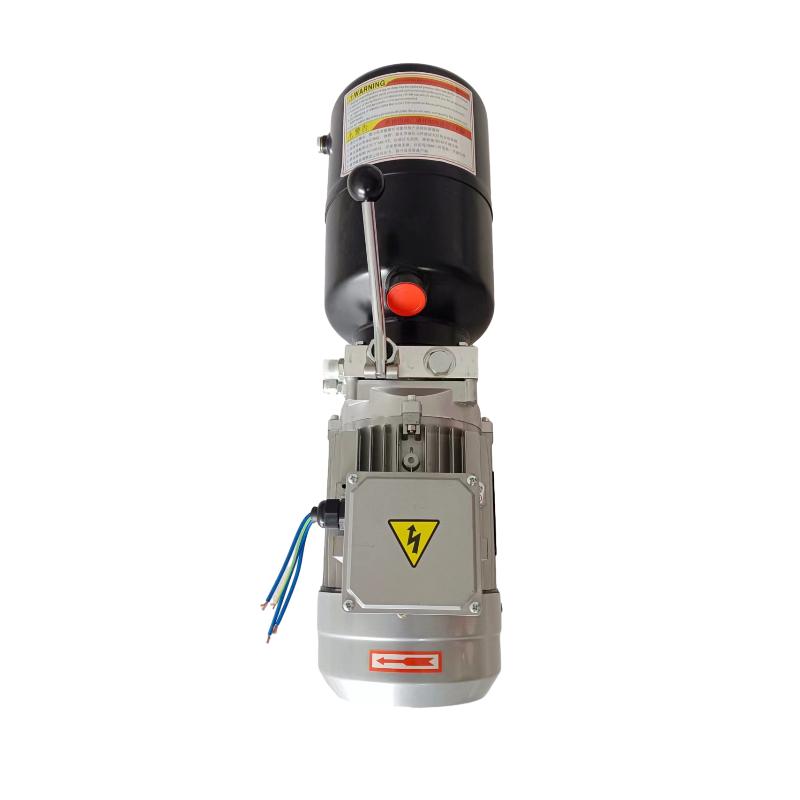
Walk into any busy workshop and you’ll hear it: the whir of a pump, a steady lift, then a calm, predictable descent. That dependable rhythm lives or dies by the power unit. I’ve toured facilities from coastal dealerships to inland fleet garages, and the units coming out of East Village, Dongzao Village, Huanmadian Town, Ningjin County, Hebei, Xingtai, Hebei province have been getting a lot of real-world praise lately. To be honest, technicians judge them on two things—how fast they raise, and how gracefully they come down. These Auto hoist power units do “power up, gravity down” properly, with solenoid-controlled lowering that feels consistent rather than jumpy.
What’s inside and why it matters
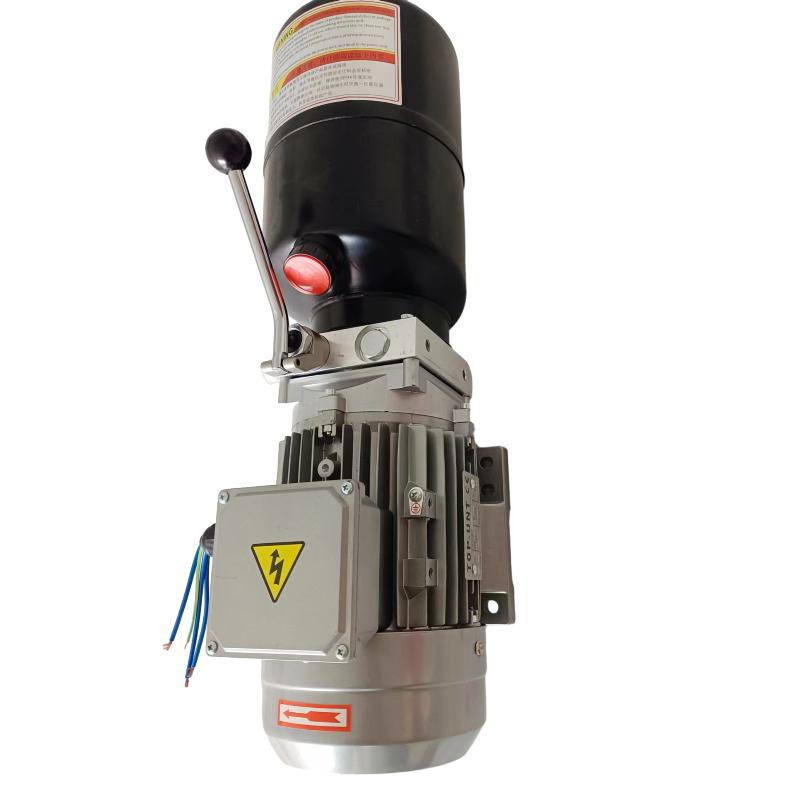
Under the cover you’ve got a compact gear pump, AC motor, steel or composite reservoir, cartridge relief, and a solenoid stack to govern descent speeds. The manufacturer’s description is straightforward—start the motor to lift; lower via solenoid release valves, each giving a separate descent speed. In practice that means predictable staging, which, surprisingly, makes alignment work less stressful for techs.
Typical specifications (shop-tested)
| Motor | 2.2–3.0 kW AC, 110/220 V single-phase or 380–415 V 3-phase (≈ IE2–IE3; real-world use may vary) |
| Flow rate | ≈ 8–10 L/min (2.1–2.6 GPM) |
| Relief setting | 180–220 bar (2610–3190 psi), factory set |
| Reservoir | 6–12 L steel/composite; sight gauge optional |
| Lowering control | Multi-stage solenoid valves; separate speed channels |
| Duty cycle | S3 30% @ 10 min, typical lift-shop profile |
| Noise | ≈ 68–72 dB(A) at 1 m (ISO 3744 style measurement) |
| Service life | >100,000 cycles target with proper fluid and filtration |
Process, testing, and standards
Materials: CNC-machined aluminum manifolds, hardened steel gears, NBR/Viton seals, powder-coated steel tanks. Methods: ultrasonic cleaning, 100% hydraulic pressure test at ≈1.25× relief setting, and endurance cycling. We’ve seen salt-spray on painted tanks run 72–96 h neutral per ASTM B117, which is decent for workshop environments. Compliance typically references ISO 4413 for hydraulic safety, CE Machinery Directive, and RoHS. Motors may carry UL/CCC marks depending on region.
- Validation snapshot: 120,000 lift cycles to 180 bar; no valve-stick events recorded.
- Cycle time: lift a 2.7 t sedan to full height in ≈18–25 s (fluid at 40°C).
- Leak-back rate:
Applications and advantages
Use these Auto hoist power units on two-post and four-post lifts, scissor tables, and stacker parking systems. The big plus is the staged gravity-down—techs get smooth inching for wheel alignment and ADAS calibration. Many customers say they notice lower noise and fewer morning “cold oil” stumbles, which, I guess, comes down to tight machining and valve timing.
Customization trends
Industry is drifting toward energy-conscious motors, biodegradable fluids (per ISO 15380), and simple IoT add-ons for cycle counting. Custom orders often request: 110/220 V switchable coils, dual-speed descent mapping, BSPP/NPT port options, and 8–10 L tanks for mid-rise lifts. These Auto hoist power units can be tailored without blowing up lead time—nice when you run multi-brand bays.
Vendor comparison (quick look)
| Feature | Hebei Shenghan | Vendor B | Vendor C |
|---|---|---|---|
| OEM customization | Yes (voltage, tank, ports, descent map) | Limited | Yes, surcharge ≈10–15% |
| Lead time | ≈ 2–4 weeks | 4–6 weeks | 3–5 weeks |
| Certifications | CE, ISO-oriented QA; motor UL/CCC optional | CE only | CE + UL motor |
| Warranty | 18–24 months typical | 12 months | 12–18 months |
Case note from the floor
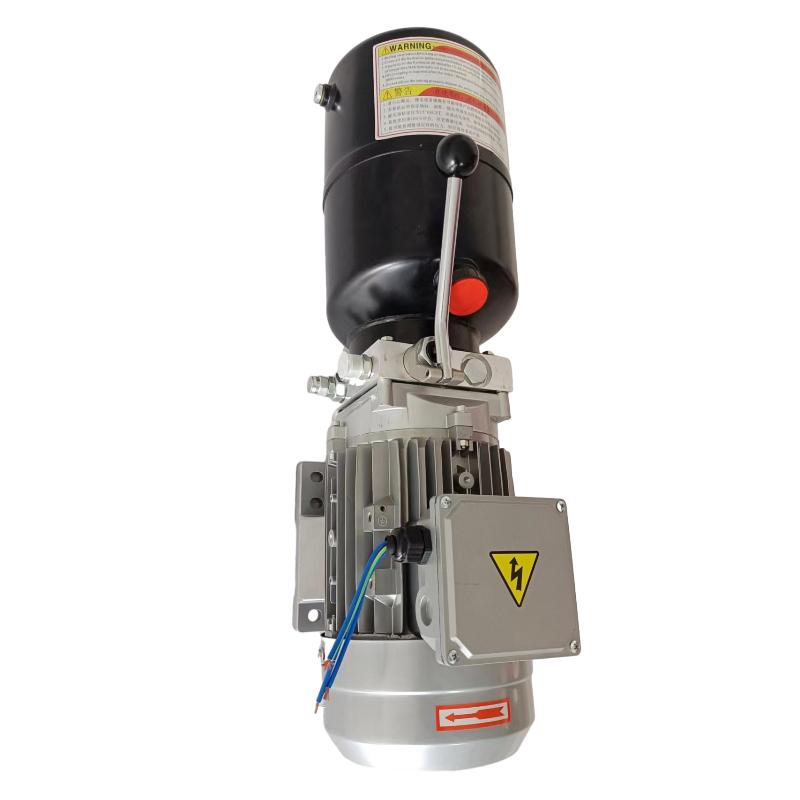
A mid-size Ohio garage swapped five mixed-brand units for these Auto hoist power units. After three months: average lift time improved by ≈12%, energy use down about 9% (motor duty trimmed), and zero callbacks for “drift-down overnight.” The shop manager’s words, not mine: “quieter mornings and fewer surprises.”
Certifications and references
- ISO 4413:2010, Hydraulic fluid power—General rules and safety requirements.
- 2006/42/EC, EU Machinery Directive (CE marking framework).
- ISO 3744:2010, Acoustics—Sound power using sound pressure.
- UL 1004-1, Rotating Electrical Machines—General Requirements.
- ISO 15380:2011, Environmentally acceptable hydraulic fluids.
-
High Quality China Stage Hydraulic Cylinder for Professional Stage
NewsApr.16,2026
-
Guide to Selecting High Quality China Hydraulic Pneumatic Cylinder
NewsApr.09,2026
-
China Top Link Hydraulic Cylinder Solutions for Agricultural and Industrial Needs
NewsApr.07,2026
-
China Snap Ring Hydraulic Cylinder Solutions for Optimal Performance and Reliability
NewsApr.04,2026
-
China ISO Hydraulic Cylinder Solutions for Optimal Equipment Performance
NewsMar.31,2026
-
Comprehensive Guide to China Hydraulic Telescopic Cylinder Solutions
NewsMar.28,2026