
Oct . 27, 2025 12:15 Back to list
90/105-50-180-480 | ISO-Certified, In-Stock, Fast Delivery
Field Notes on a Workhorse Hydraulic Cylinder: [90/105-50-180-480]
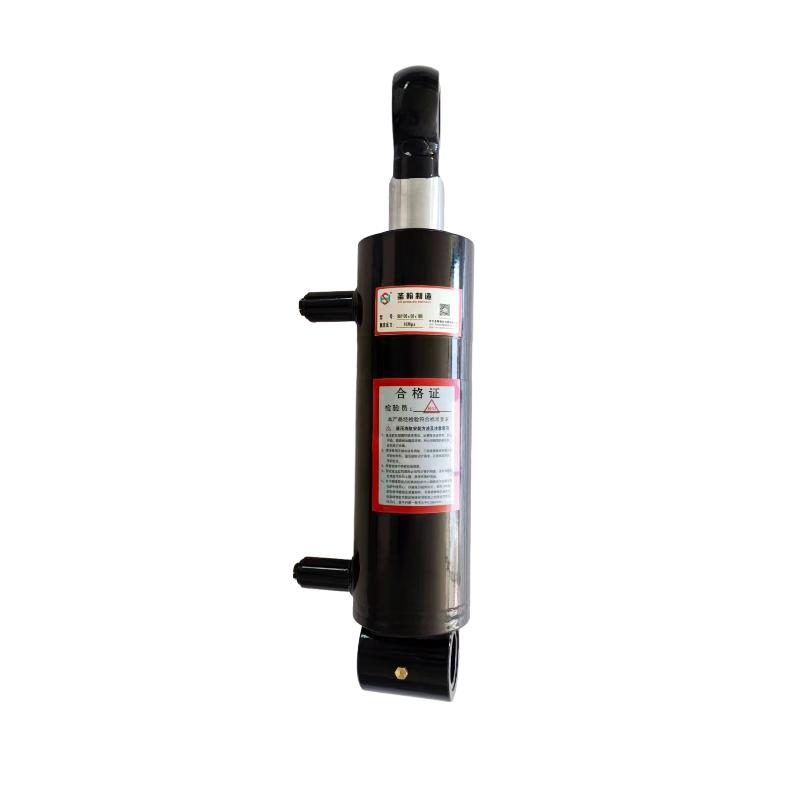
I first heard about this model during a muddy plant visit in Hebei. The origin story is as specific as it gets—East Village, Dongzao Village, Huanmadian Town, Ningjin County, Xingtai—where small batch runs still mean something. The [90/105-50-180-480] is built around a 20# carbon steel honed (rolled) tube, a 45 mm piston rod made from 50# carbon steel with hard chrome, and that no-nonsense black topcoat. Honestly, it’s the sort of cylinder mechanics like because it behaves the same on a wet Tuesday as it does on a sunny Sunday.
What’s inside (and why it matters)
- Materials: 20# carbon steel honed tube (inner wall rolling), 50# carbon steel rod, hard-chrome plated.
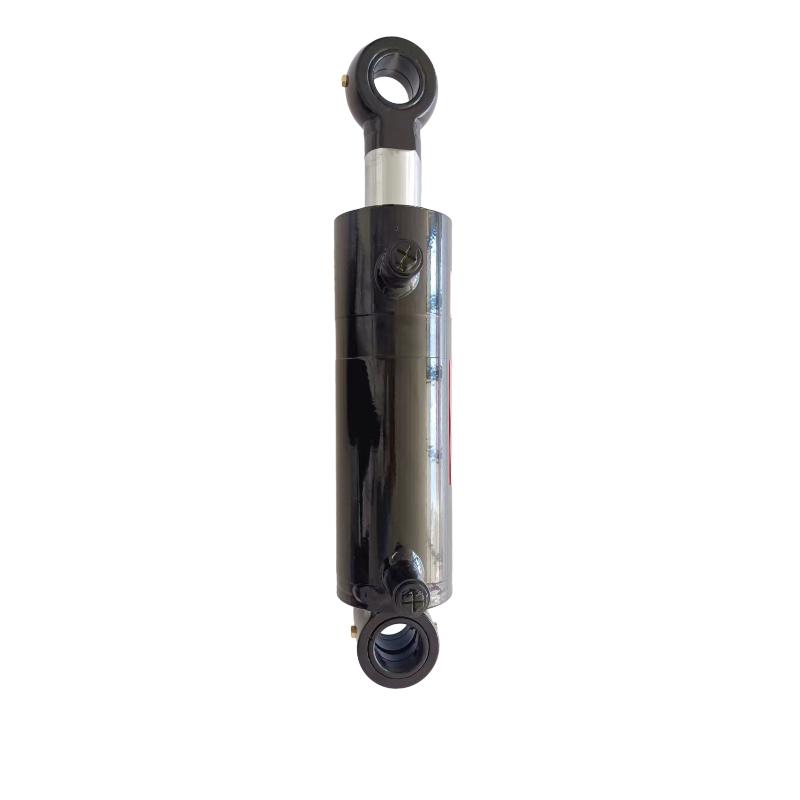
- Interfaces: 40×50 steel sleeves at earrings and cylinder base for wear resistance and easy rebuilds.
- Finish: Black industrial paint; field techs say it hides grime well—practical, not glamorous.
- Seals: Typically nitrile/FKM with PTFE backups; real-world life varies with oil cleanliness and duty cycle.
Indicative Specifications
Numbers below reflect a common build; customization is routine.
| Bore (ID) | ≈ 90 / 105 mm honed tube (20# CS) |
| Rod Diameter | 45 mm (50# CS), hard-chrome ≈ 20–30 μm |
| Stroke | ≈ 180 mm (common spec; other strokes on request) |
| Closed Length | ≈ 480 mm (configuration-dependent) |
| Working Pressure | Up to 16 MPa typical; proof tested ≥ 1.5× WP |
| Surface Finish (Tube) | Honed/rolled, Ra ≈ 0.2–0.4 μm |
| Mounts | Earring eye + base sleeve, 40×50 mm |
Where it’s used (and what operators say)
- Agricultural trailers and balers: seasonal peaks, dusty environments.
- Construction attachments: compact loaders, skip bins—impact-heavy cycles.
- Municipal waste handling: corrosion risk; chrome and paint quality matter.
- Forestry and general machinery: mixed-duty cycles, long idle periods.
Customer feedback? Many mechanics mention “no nonsense sealing” and predictable rebuilds. One buyer in Shandong told me they ran a [90/105-50-180-480] at ~150 bar for a harvest season with zero visible scoring—small sample, yes, but encouraging.
Process flow and testing
- Material cut and ID rolling/honing of 20# tube; straightness and Ra checked per ISO 3320 fit ranges.
- Rod machining from 50# carbon steel; induction hardening optional; hard chrome plating ≈ 20–30 μm.
- Welding of end caps/ears; stress relief as needed.
- Assembly with seal kits (NBR/FKM, PTFE backups); cleanliness targets per ISO 4406 recommendations.
- Hydrostatic test at ≥ 1.5× rated pressure; leak test at operating pressure.
- Optional salt spray (ASTM B117/ISO 9227) on plated coupons; paint adhesion cross-hatch.
Service life: around 0.8–1.5 million cycles in moderate duty with clean oil; harsh duty may be shorter. In-house data showed 200k cycles at 160 bar without leakage and 120 h neutral salt spray with no red rust on rod section—your environment will vary.
Vendor landscape (quick comparison)
| Criteria | Hebei maker (origin plant) | Typical importer/trader |
|---|---|---|
| Tube finish | Rolled/honed, Ra ≈ 0.2–0.4 μm | Honed; Ra varies 0.3–0.8 μm |
| Chrome thickness | ≈ 20–30 μm, options on request | ≈ 10–25 μm typical |
| Proof test | ≥ 1.5× WP documented | Varies; documentation not always included |
| Customization | Stroke, ports, paint, seals | Limited; batch constraints |
| Certifications | ISO 9001 QMS, process records | Depends on subcontractors |
Customization and integrations
Common tweaks for the [90/105-50-180-480]: alternative porting (BSPP/NPT/metric), clevis or trunnion mounts, low-temp seals for -35 °C starts, rod wipers for slurry, and thicker paint systems for coastal air. If you spec to ISO 6020-2 envelope dimensions, integration tends to be painless.
Case snippets
- Ag trailer OEM in Hebei: switched to 30 μm chrome option; reported 30% fewer rod touch-ups after harvest.
- Waste skip operator, coastal city: upgraded to FKM seals and epoxy primer; two seasons, normal seal wear only.
Standards and compliance
Design and safety align with ISO 4413 guidance; dimensional references from ISO 3320; cylinder envelope per ISO 6020-2 when requested; corrosion checks vs. ASTM B117/ISO 9227; factory QMS under ISO 9001—ask for the current certificate, to be honest.
Sources
- ISO 4413: Hydraulic fluid power—General rules and safety requirements. https://www.iso.org/standard/63658.html
- ISO 3320: Fluid power systems—Cylinder bores and piston rod diameters. https://www.iso.org/standard/81069.html
- ISO 6020-2: Hydraulic cylinders—Mounting dimensions for 16 MPa. https://www.iso.org/standard/50405.html
- ASTM B117: Standard Practice for Operating Salt Spray. https://www.astm.org/b117-19.html
- ISO 9227: Corrosion tests in artificial atmospheres—Salt spray tests. https://www.iso.org/standard/63543.html
- ISO 9001: Quality management systems—Requirements. https://www.iso.org/standard/62085.html
-
High Quality China Stage Hydraulic Cylinder for Professional Stage
NewsApr.16,2026
-
Guide to Selecting High Quality China Hydraulic Pneumatic Cylinder
NewsApr.09,2026
-
China Top Link Hydraulic Cylinder Solutions for Agricultural and Industrial Needs
NewsApr.07,2026
-
China Snap Ring Hydraulic Cylinder Solutions for Optimal Performance and Reliability
NewsApr.04,2026
-
China ISO Hydraulic Cylinder Solutions for Optimal Equipment Performance
NewsMar.31,2026
-
Comprehensive Guide to China Hydraulic Telescopic Cylinder Solutions
NewsMar.28,2026