
Oct . 14, 2025 17:36 Back to list
Unlock Precision Power with the Double Acting Hydraulic Cylinder
Compact, responsive, and engineered for modern hydraulics, the Double acting hydraulic cylinder has become a cornerstone of industrial motion control. From heavy machinery to precision automation, its ability to provide equal force in both extension and retraction makes it indispensable for demanding tasks that require efficiency and control.
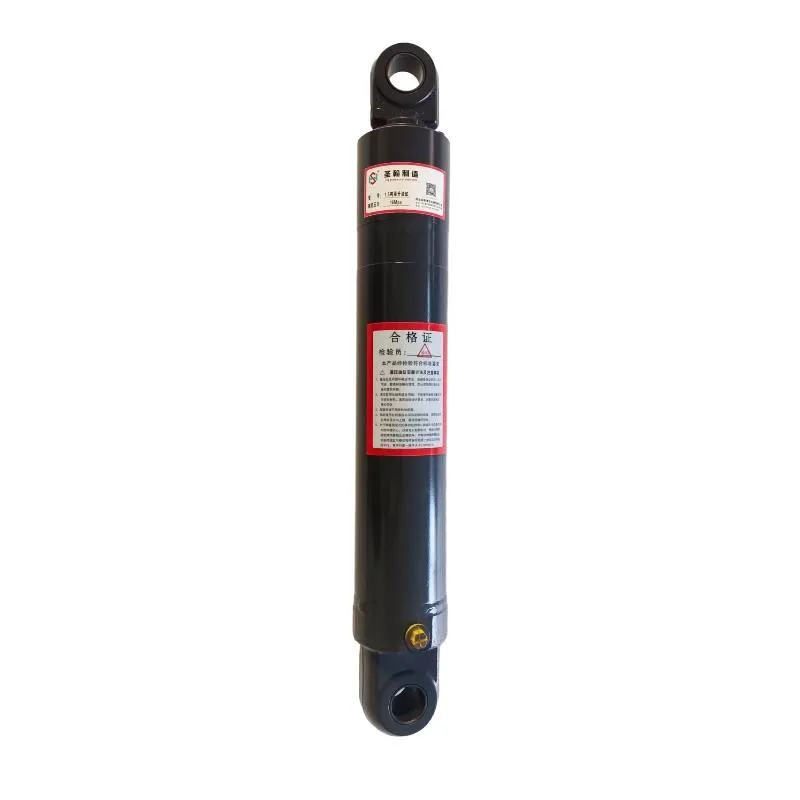
How the Double Acting Hydraulic Cylinder Enhances Efficiency and Accuracy
The defining feature of the Double acting hydraulic cylinder is its ability to deliver force bidirectionally—meaning it can push and pull with equal power. This dual motion eliminates the reliance on gravity or external load for retraction, which is often a limitation in single-acting cylinders. As a result, systems using double acting designs benefit from faster cycle times and synchronized motion.
For applications like robotics arms, production line actuators, and automated pressing systems, accuracy is essential. The small double acting hydraulic cylinder, in particular, is prized for its responsiveness. With a compact body and precise control over pressure, it ensures the movement is exact and repeatable, making it ideal for intricate positioning tasks or equipment that demands millimeter-level accuracy.
Moreover, most high-quality models are equipped with advanced sealing systems and tight tolerances that reduce internal leakage and maximize hydraulic efficiency. This means more energy is converted into useful motion—translating directly into lower energy costs and higher system productivity.
How Bidirectional Motion Is Achieved in a Double Acting Hydraulic Cylinder
The Double acting hydraulic cylinder operates using two ports—one for extension and another for retraction. When hydraulic fluid is pumped into the cap end of the cylinder, the piston rod extends. Conversely, when fluid is directed to the rod end, it retracts. This bidirectional flow is managed by a directional control valve, which toggles the hydraulic circuit between forward and reverse flow.
This two-way hydraulic control allows the Double acting hydraulic cylinder to perform work on both strokes, improving force utilization and minimizing idle time. Whether lifting, pressing, tilting, or clamping, bidirectional control provides unmatched flexibility.
One unique advantage is how this design maintains consistent force output in both directions. This is especially important when lifting weights that require uniform acceleration and deceleration. With the 6 inch hydraulic cylinder, for instance, you get robust performance in construction equipment or agricultural implements that demand high power and reliability without compromise.
Understanding the Cylinder Diameter vs. Piston Rod Diameter in a Double Acting Hydraulic Cylinder
The performance of a Double acting hydraulic cylinder depends heavily on the proportional relationship between its cylinder bore (diameter) and piston rod diameter. A larger bore increases the surface area of the piston, resulting in more force during the extension stroke, given constant pressure. However, during retraction, the piston rod occupies part of the bore area, slightly reducing the effective surface and thus the force.
In practical terms, for high-force applications where symmetry of motion is not critical, designers often select larger bores with moderate rod sizes. But in systems requiring balanced motion—such as synchronized lift tables or telescoping platforms—the bore-to-rod ratio is optimized for consistent extension and retraction speeds.
For example, a 6 inch hydraulic cylinder with a 2.5-inch piston rod diameter offers powerful force while maintaining structural stability under heavy loads. Meanwhile, a small double acting hydraulic cylinder might feature a 1-inch bore and 0.5-inch rod for compact operations requiring delicate but precise actuation.
A proper understanding of this ratio ensures not only effective power transmission but also longer seal life and reduced wear on internal components, which ultimately impacts reliability.
Market Value and Versatility of the Double Acting Hydraulic Cylinder
The double acting hydraulic cylinder price is influenced by factors such as size, stroke length, material, sealing system, and manufacturing precision. Entry-level models are available at affordable costs, especially for applications such as agricultural equipment, garage tools, or light manufacturing.
However, industrial-grade cylinders that must endure continuous operation, harsh environments, or specialized functions often come at a higher double acting hydraulic cylinder price due to enhanced materials and custom engineering.
Applications span across various industries. In agriculture, the small double acting hydraulic cylinder is used in planters, sprayers, and tillage machines. In material handling, 6 inch hydraulic cylinder models are key in forklifts, loaders, and heavy-duty presses. In marine and aerospace systems, custom compact cylinders provide actuation for tight spaces with critical performance needs.
From OEMs to maintenance teams, demand for efficient and affordable cylinders is growing. Manufacturers now offer quick lead times and flexible design services to meet rising expectations for durability and affordability.
Double Acting Hydraulic Cylinder FAQs
What is the main advantage of using a Double acting hydraulic cylinder over a single-acting one?
The primary benefit is its ability to apply force in both directions, increasing efficiency and eliminating the need for gravity or external load to return the piston.
How does a small double acting hydraulic cylinder differ from larger models?
It’s designed for compact spaces and lighter loads. Despite its small size, it provides precise control and quick response, ideal for automation and robotics.
Is the double acting hydraulic cylinder price higher than that of single-acting cylinders?
Generally, yes, due to the additional port and internal complexity. However, the increase in performance and versatility often justifies the higher price.
What applications are ideal for a 6 inch hydraulic cylinder?
Heavy lifting, industrial presses, agricultural equipment, and construction machinery all benefit from the robust force and stroke capacity of a 6 inch hydraulic cylinder.
Can the Double acting hydraulic cylinder be customized?
Absolutely. Manufacturers offer customization in terms of stroke length, bore diameter, rod material, mounting type, and even integrated sensors for motion control.
-
High Quality China Stage Hydraulic Cylinder for Professional Stage
NewsApr.16,2026
-
Guide to Selecting High Quality China Hydraulic Pneumatic Cylinder
NewsApr.09,2026
-
China Top Link Hydraulic Cylinder Solutions for Agricultural and Industrial Needs
NewsApr.07,2026
-
China Snap Ring Hydraulic Cylinder Solutions for Optimal Performance and Reliability
NewsApr.04,2026
-
China ISO Hydraulic Cylinder Solutions for Optimal Equipment Performance
NewsMar.31,2026
-
Comprehensive Guide to China Hydraulic Telescopic Cylinder Solutions
NewsMar.28,2026