
Oct . 14, 2025 17:38 Back to list
Versatile Power and Precision: The Advanced Double Acting Power Unit for High-Demand Machinery
A reliable Double acting power unit is at the heart of many modern hydraulic systems, enabling precise bidirectional control with high efficiency and consistent power output. Whether you're working in agricultural environments, construction zones, or mobile repair stations, selecting the right Double acting power unit matched with smart oil filtration and appropriate capacity will make all the difference in performance, safety, and maintenance.
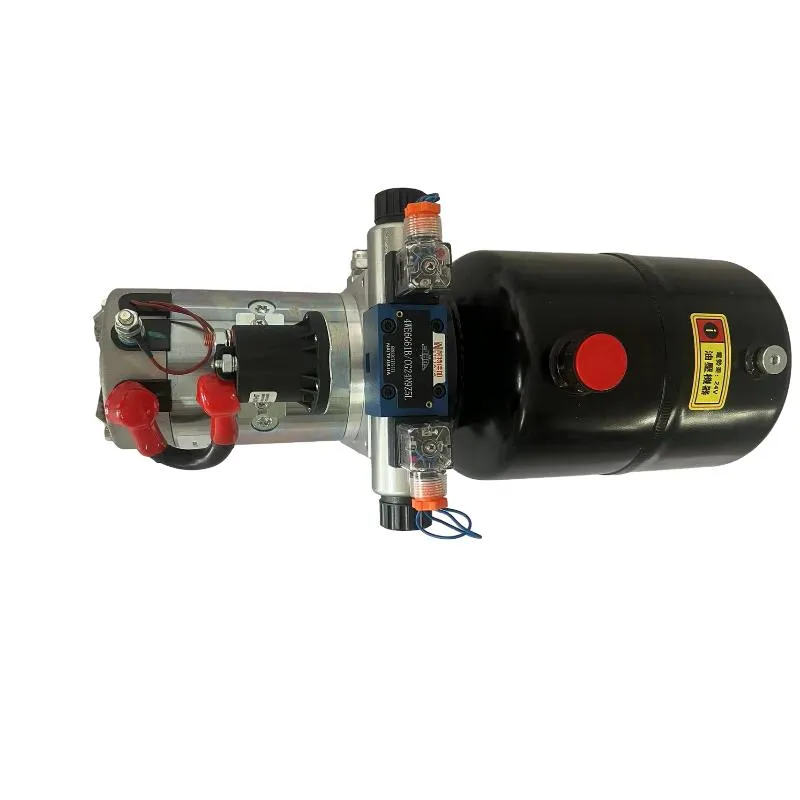
Matching a Double Acting Power Unit with a Filtration System for Long-Term Efficiency
The hydraulic oil filtration system plays a pivotal role in maximizing the longevity and stability of a Double acting power unit. Contaminants like dust, metal shavings, and degraded fluid residues can compromise internal seals, clog precision valves, and reduce system responsiveness. For this reason, every Double acting power unit should be paired with a properly rated high-efficiency filter.
When used in tandem with a high-cycle 12v hydraulic power unit, which typically operates in mobile agricultural or off-road machinery, fine filtration (often 10–25 microns) is crucial. This ensures that the control valves inside the dc hydraulic power unit remain free of debris that can lead to valve sticking or pressure inconsistency.
A well-designed hydraulic system using a 20 gpm hydraulic power unit will typically include a pressure-side filter with clog indicators and an easy-access cartridge design. In more demanding scenarios such as continuous operation of agricultural harvesters, it is advisable to use dual filtration—both pressure-side and return-line filters—for optimal oil cleanliness and performance.
Selecting a Double Acting Power Unit Based on Load and Usage Requirements
Choosing the right Double acting power unit is about more than just voltage compatibility; it’s about aligning flow rate, pressure ratings, and duty cycles with the machine's actual load profile. A 12v hydraulic power unit might be perfect for light-duty or mobile applications, such as lifting platforms or hydraulic trailers. However, for heavier equipment such as tractors with complex implements, a higher-flow 20 gpm hydraulic power unit offers more efficient cylinder movement and force delivery.
The load characteristics also determine whether a dc hydraulic power unit with intermittent or continuous duty capability is appropriate. For equipment requiring precise and frequent changes in direction, such as log splitters or trailer stabilizers, the responsiveness of a Double acting power unit ensures immediate fluid reversal and smooth operation.
Advanced models allow for pressure adjustment via integrated relief valves, which prevents overloading and optimizes the hydraulic circuit. To maintain safety, manufacturers design Double acting power unit models with built-in check valves and load-holding capabilities, crucial when operating under variable terrain or slope conditions.
Application of Double Acting Power Unit in Agricultural Machinery
In agricultural equipment, the Double acting power unit finds wide application due to its ability to both extend and retract hydraulic cylinders with equal force. Take for example a field sprayer that needs to deploy and retract booms evenly under high load—the Double acting power unit provides the synchronized control needed to maintain structure stability.
Similarly, mobile plows, mechanical arms for hay loaders, or even hopper open/close systems in grain transport vehicles rely on dc hydraulic power unit control. In these cases, 12v hydraulic power unit versions are especially popular because they can run directly from a tractor battery, providing off-grid functionality for field use.
When it comes to demanding operations such as adjusting the blade angle on a plow or moving telescoping implements, the 20 gpm hydraulic power unit offers both the flow rate and pressure needed for responsive operation across multiple actuators. The high efficiency of the Double acting power unit ensures minimal power loss even in extended tasks like harvesting or tilling.
Why More Users Are Switching to the Double Acting Power Unit Platform
Today’s equipment owners and operators are prioritizing control precision, reduced maintenance, and energy efficiency—goals easily met by the Double acting power unit. Unlike single-acting systems, which rely on external forces like gravity to retract, the Double acting power unit uses hydraulic force in both directions. This translates to greater control, increased reliability, and a broader range of potential applications.
For mobile machinery, especially in farming, a 12v hydraulic power unit eliminates the need for complex engine-driven hydraulic systems. It reduces weight, lowers energy consumption, and simplifies installation. Meanwhile, industries requiring faster cylinder cycling under pressure, such as loading and unloading of heavy goods, often select a 20 gpm hydraulic power unit to meet these demands with ease.
Additionally, customization is easier than ever. Most dc hydraulic power unit suppliers offer a wide range of configurations, including horizontal or vertical reservoirs, integrated mounting plates, and remote-control compatibility. For maintenance teams and DIY installers, this means simplified integration into existing systems.
Double Acting Power Unit FAQs
How do I know which Double acting power unit is right for my machinery?
Determine the flow rate and pressure required by your hydraulic cylinder. Match these with the specifications of the Double acting power unit. For mobile use, opt for a 12v hydraulic power unit; for high-volume applications, consider a 20 gpm hydraulic power unit.
What is the role of the oil filtration system in a Double acting power unit?
It prevents contamination that can cause wear or failure. High-efficiency filters prolong the life of your dc hydraulic power unit and improve system stability.
Can a 12v hydraulic power unit handle continuous duty?
Some models are built for intermittent duty, while premium versions are designed for continuous operation. Always check the duty cycle before installation.
Is the 20 gpm hydraulic power unit suitable for mobile equipment?
Yes, but it requires adequate power supply and pressure-rated components. It’s ideal for applications requiring high flow, such as heavy farm equipment.
How is a dc hydraulic power unit different from an AC unit?
A dc hydraulic power unit runs on battery or vehicle power (e.g., 12V or 24V), making it ideal for mobile or off-grid applications, while AC units require grid power.
-
High Quality China Stage Hydraulic Cylinder for Professional Stage
NewsApr.16,2026
-
Guide to Selecting High Quality China Hydraulic Pneumatic Cylinder
NewsApr.09,2026
-
China Top Link Hydraulic Cylinder Solutions for Agricultural and Industrial Needs
NewsApr.07,2026
-
China Snap Ring Hydraulic Cylinder Solutions for Optimal Performance and Reliability
NewsApr.04,2026
-
China ISO Hydraulic Cylinder Solutions for Optimal Equipment Performance
NewsMar.31,2026
-
Comprehensive Guide to China Hydraulic Telescopic Cylinder Solutions
NewsMar.28,2026