
Oct . 19, 2025 12:15 Back to list
Auto Hoist Power Units – Fast, Quiet, Reliable Hydraulics
A Field Guide to Auto hoist power units
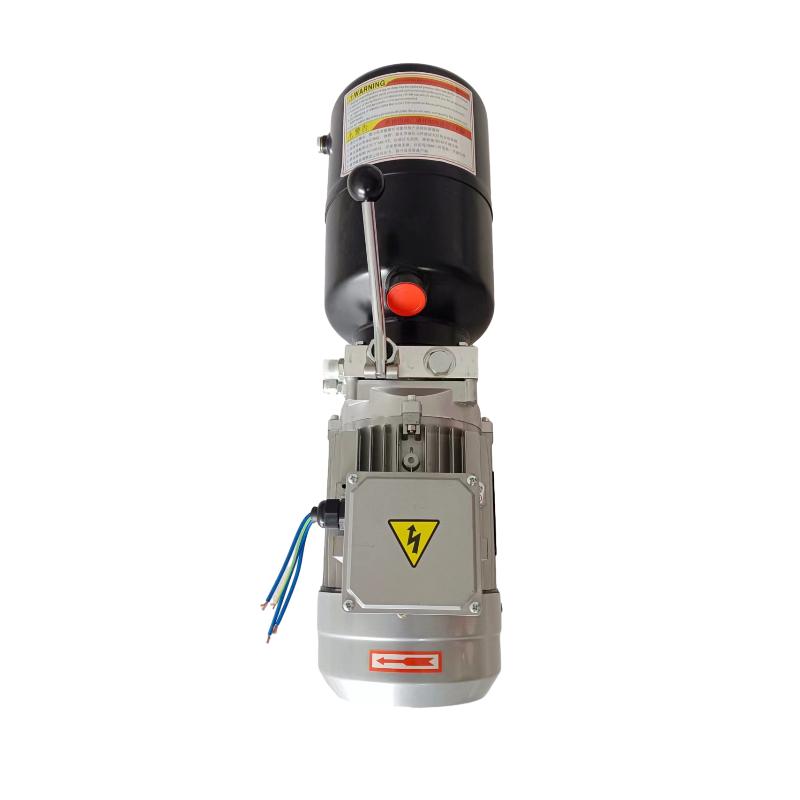
If you work around lifts, you already know the heartbeat of the system isn’t the steel—it’s the power pack. The current generation of Auto hoist power units leans into “power up, gravity down” logic: fast, clean lifting with a controlled, predictable descent gated by solenoid valves. I’ve watched plenty of shops quietly replace their entire perception of “what’s normal” once they swap in a well-specified unit.
What’s trending (and why it matters)
Three shifts stand out: smarter solenoid control for fine descent speeds, broader voltage options for mixed fleets, and tougher surface treatments to beat fluid corrosion. Many customers say they want “less drama on the way down”—no chatter, no overshoot. Modern Auto hoist power units answer with separate solenoids assigning discrete lowering speeds. It sounds simple; it isn’t.
Technical snapshot (real-world ranges)
| Parameter | Typical Spec (≈, may vary) |
|---|---|
| Motor power | ≈1.5–3.0 kW |
| Voltage options | 110/220 VAC 1Ø; 380–415 VAC 3Ø; 12/24 VDC (select) |
| Pump displacement | ≈2–5 cc/rev gear pump |
| Relief pressure | ≈18–22 MPa (2600–3200 psi) |
| Flow rate | ≈6–12 L/min |
| Reservoir | ≈6–10 L steel or composite |
| Lowering control | Solenoid valves; independent descent speeds |
| Duty cycle | S3 intermittent; confirm per site |
| Filtration | ≤25 μm recommended |
| Noise | ≈70–78 dB(A) at 1 m |
Materials, build, and testing
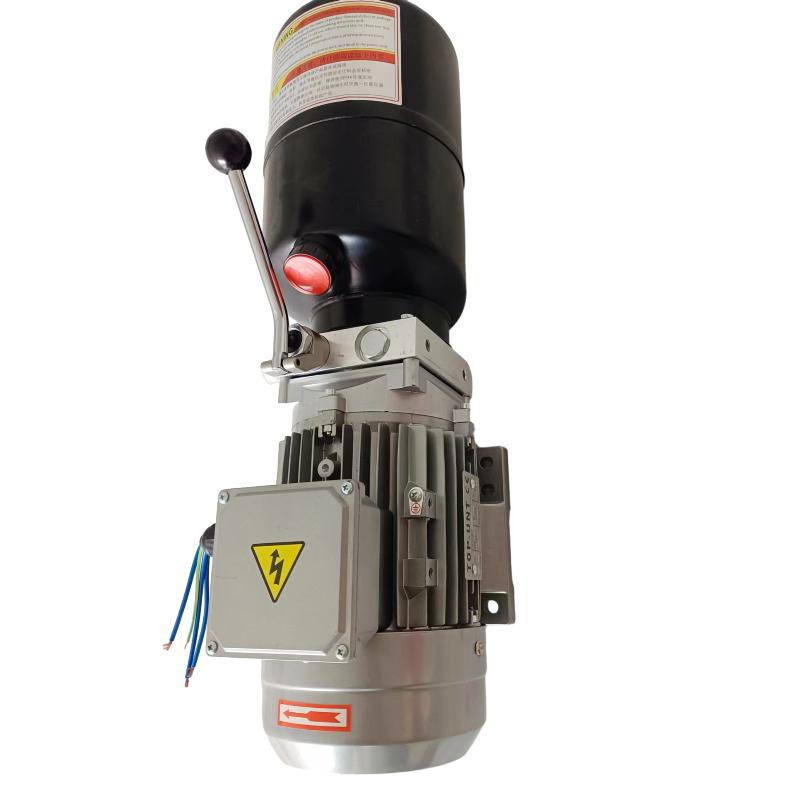
From East Village, Dongzao Village, Huanmadian Town, Ningjin County, Hebei (Xingtai), the better Auto hoist power units I’ve seen use CNC-machined aluminum manifolds, hardened steel valve poppets, and sealed motors with IP ratings around IP54. Typical process flow: material traceability → CNC → deburring → surface treatment (phosphate/anodize) → assembly in clean cells → hydraulic flushing → 100% leak test. Test routines often include 1.5× rated pressure proof, cold-start at −20 °C, and endurance cycles (≈30k–50k lift cycles under load). Service life? With proper oil and filter discipline, 5–8 years is common.
Vendor landscape (quick comparison)
| Vendor | Origin | Customization | Lead time | Compliance support |
|---|---|---|---|---|
| Hebei Shenghan | Xingtai, Hebei | Valve logic, tanks, voltage | ≈2–4 weeks | ISO/CE docs on request |
| US Brand A | USA/EU | Moderate | ≈3–6 weeks | UL/CSA, CE packages |
| Generic Import | Mixed | Limited | Stock-based | Basic CoCs |
Applications, plus a quick story
Use cases run from 2-post service lifts to 4-post storage racks and compact scissor lifts. A shop owner in Zhengzhou told me, “We swapped to new Auto hoist power units mainly for smoother descent—turns out our techs work faster when the car doesn’t ‘bounce’ at the end.” Their measured throughput nudged up ≈7% over two months. Not huge, but real.
Customization and documentation
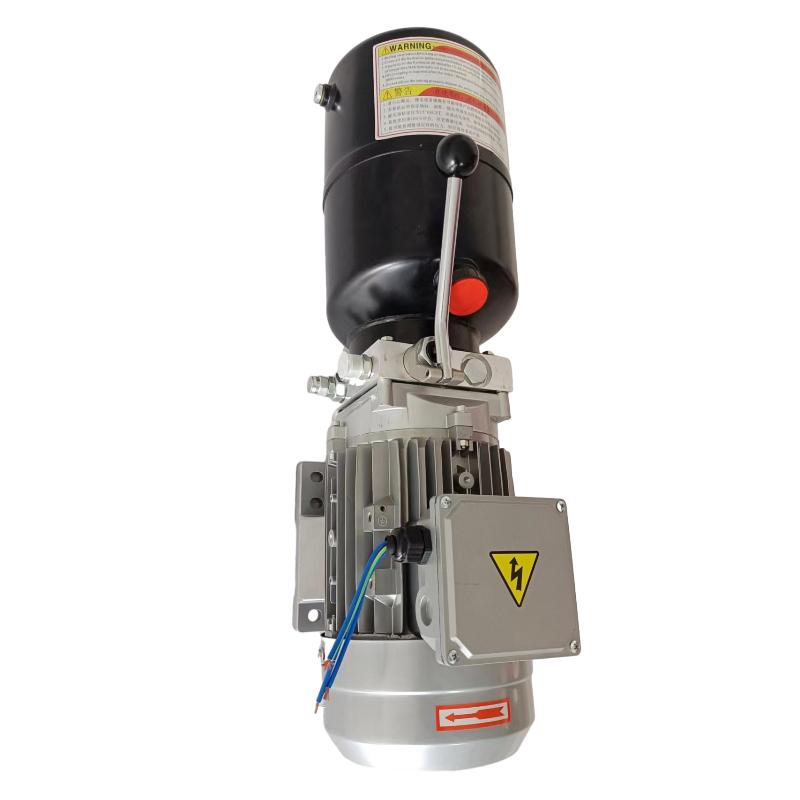
- Valve stacks: separate solenoids for dual-speed lowering, emergency manual drop
- Reservoirs: steel/composite, sight gauge, magnetic drain
- Electricals: 110–415 VAC; 12/24 VDC coils; IP54–55 motors
- Fluids: ISO VG 32/46 hydraulic oils; low-temp blends for cold regions
On compliance, reputable makers align to ISO 4413 hydraulic safety, CE Machinery Directive, and electrical panel practices like UL 508A/CSA where applicable. To be honest, documentation quality varies; ask for test reports (pressure, leak, endurance) before you buy.
Test data (sample, indicative)
Proof pressure: 1.5× rated for 60 s (no deformation, per ISO 4413). Leakage at 20 MPa: ≤3 ml/min. Cold start torque at −20 °C: within 120% nominal. Descent stability: overshoot ≤5 mm at 2 speeds under 75% SWL. Your mileage, of course, may vary.
Auto hoist power units are not glamorous, but they’re the quiet profit center in a lift. Choose on control, serviceability, and validated test data—not just wattage on a nameplate.
Authoritative citations
- ISO 4413: Hydraulic fluid power — General rules and safety requirements for systems and their components.
- Machinery Directive 2006/42/EC (CE) and EN 1493: Vehicle lifts — Safety requirements.
- UL 508A: Standard for Industrial Control Panels; CSA C22.2 No. 14.
- ISO 9227: Corrosion tests in artificial atmospheres — Salt spray tests.
-
High Quality China Stage Hydraulic Cylinder for Professional Stage
NewsApr.16,2026
-
Guide to Selecting High Quality China Hydraulic Pneumatic Cylinder
NewsApr.09,2026
-
China Top Link Hydraulic Cylinder Solutions for Agricultural and Industrial Needs
NewsApr.07,2026
-
China Snap Ring Hydraulic Cylinder Solutions for Optimal Performance and Reliability
NewsApr.04,2026
-
China ISO Hydraulic Cylinder Solutions for Optimal Equipment Performance
NewsMar.31,2026
-
Comprehensive Guide to China Hydraulic Telescopic Cylinder Solutions
NewsMar.28,2026